
AI automation for business: built into your software where it earns its place, and left out where it does not.
AI is how we work, not a product we sell. It is the reason a studio this size can run its own products and still take on client work. When it belongs in your software, we build it in: an assistant that runs a CRM from a truck, a pipeline that classifies 14,000 companies, a photo flow that files itself. When it does not belong, we say so and build the boring version that works. Canadian owned, and we work with clients anywhere.
You've probably got one of these problems.
Someone told you that you need an AI strategy.
You do not need a strategy. You need to know which three tasks in your business are repetitive, well defined and expensive, and whether software or a model should do them.
Your team spends its evenings on admin.
Quotes retyped onto invoices, photos filed by hand, records classified one at a time. Every one of those is a candidate, and most of them do not need AI at all.
You tried a chatbot and nobody used it.
A model on the side of a product is a toy. A model inside the workflow, with access to the real data and the real actions, is a tool.
What we build with AI automation: assistants that act, pipelines that check their own work, and plain automation where that is enough.
Three patterns cover most of what we ship. An assistant that can act: on Blossom Landscaping the whole CRM is exposed through an MCP server and an API, so the owner can book a visit, invoice a job and record an e-transfer by asking, from a truck. A pipeline that checks itself: on CANspec AI classifies 14,000 companies into a four level taxonomy, enriches each record, and a second pass flags inconsistencies before anything reaches the live registry. And plain automation: on GrassWorx a photo goes from a phone to the right SharePoint folder with the right metadata in minutes, and no model was needed for most of it.
The discipline is choosing. Every task gets the same three questions: is it repetitive, is the input messy, and what does a wrong answer cost? Rules handle the first, models handle the second, and the third decides how much human review sits in the loop.
- Assistants and agents with real access to your data and actions, through MCP servers and APIs
- Classification, extraction and enrichment pipelines with a QA pass before anything goes live
- Document and photo handling: capture, tag, file, find
- Workflow automation between the tools you already use
- Logging, evaluation and monitoring, so you know when a model drifts
- The same tools inside our own build process, which is part of why our builds cost what they cost

Does AI automation belong here? Three questions we ask about every task.
Answer them for a task in your business and see what we would build.
Does the same task happen many times a week?
Is the input messy: free text, photos, documents, phone calls?
Would a wrong answer cost real money, or someone's trust?
AI automation and your data: your data, your models, your call.
Most AI worry is data worry, and it is reasonable. We design for it: your data stays in your accounts, prompts and outputs are logged so you can see what the model saw and said, personal information is minimised before it reaches a model, and hosting can stay in a Canadian region when residency matters. We build with PIPEDA in mind, and we will tell you when a task should not touch a model at all.
Models are swappable. We build against an interface, not a vendor, so when a better or cheaper model arrives the change is a configuration, not a rewrite.

Why our AI automation services start with how we work, not what we sell.
AI, agents and automation are central to how the studio runs. They write and review code, stand up infrastructure, generate and test content, and run the boring parts of our own operation. That is why a team this size can run four products and still take clients, and why we are unusually unsentimental about it. What you buy is software that works. If a model earns its place inside it, it goes in. If it does not, it stays out.
How an AI automation project runs: find the tasks, prove one, build it in, watch it.
The proof comes before the commitment. If the first task does not pay against the manual version, we stop there.
A short workshop with the people who do the work. We list the repetitive tasks, cost them, and sort them with the three questions.
The single best candidate, built end to end on real data, measured against the manual version.
Into the product or the workflow, with logging, evaluation and the human review it needs.
Monitoring for drift and cost, and the next task on the list once the first one has paid.
What AI automation work includes.
- A task workshop and a ranked list of what to automate, with what each would save
- A proof on real data before any commitment to build
- Assistants and agents, with MCP servers and APIs into your systems
- Classification, extraction and enrichment pipelines with a QA pass
- Workflow automation between your existing tools
- Logging, evaluation and monitoring
- Data handling designed for PIPEDA, with Canadian hosting where it matters
- Documentation and handover, so your team owns it
AI automation where a model earned its place, and where it did not.
 Blossom LandscapingOne CRM, run two ways: from the app, or from an AI assistant through an MCP server that can schedule visits, invoice jobs and record payments.MCP
 CANspecCompanies classified into a four level taxonomy by AI, enriched from multiple sources, and checked by a QA pipeline before going live.14,000+
 GrassWorxFrom a phone on a job site to a filed, tagged photo in SharePoint. Mostly plain automation, which was the point.Minutes
 ProdifySpec Builder Pro generates specifications from structured product data, on a platform built for building product manufacturers.Spec
AI automation questions people ask before they book.
What is AI automation for a business, in plain terms?
Software that does a repetitive task for you, where a model handles the messy part a rule cannot: reading a document, sorting a photo, understanding a request typed in plain language, drafting a reply. The automation is the workflow around it. The AI is only the piece that needs judgement. Most business automation we ship is mostly workflow, with a model in one or two places.
What can actually be automated in a small business?
Anything that happens many times a week, follows a pattern, and is currently done by a person retyping, filing or sorting. Quotes to invoices, photos to folders, enquiries to a CRM, records to categories, meeting notes to tasks. The workshop in week one finds yours and costs them, so the list is in dollars rather than possibilities.
Is our data safe?
It stays in your accounts. Personal information is minimised before it reaches a model, prompts and outputs are logged so you can audit them, and we use model providers on terms that do not train on your data. Where residency matters we host in a Canadian region, and we design with PIPEDA in mind. If a task should not touch a model at all, we say so.
What does it cost?
As part of a build it is scoped into the fixed price. On software you already run, the workshop and the first proof are a fixed price piece of work, and the build that follows is quoted before it starts. Model costs are metered and we show you the number per task, so you know what each automation costs to run.
What about wrong answers?
Models make things up, so we design for it. Tasks where a wrong answer is expensive get a person in the loop: the model drafts or proposes, someone confirms. Tasks where it is cheap run on their own with logging and a QA pass. On CANspec the QA pipeline exists precisely to catch misclassifications before they go live.
What is an MCP server, and why would we want one?
The Model Context Protocol is an open standard that lets an AI assistant use your software's real functions safely: read the schedule, create an invoice, record a payment. Building one for your product means any capable assistant can operate it in plain language, with the same permissions and checks as the app. It is how the Blossom owner runs a CRM from a truck.
Which models and tools do you use?
Claude, OpenAI and open models, chosen per task on quality, cost and where the data can go, behind an interface so they can be swapped. For workflow we use whatever fits your stack, from your existing tools' APIs to code we write. We do not sell a platform.
Do we need AI at all?
Often not, and we will tell you. Plain rules, a good form and an integration solve most admin problems without a model, and they never make anything up. Our own rule is that a model goes in only where it earns its place.
Will this replace people?
In our experience it replaces evenings. The Blossom owner still runs every job. The GrassWorx reps still take every photo. What went away was the retyping, filing and chasing that used to happen after dinner. We are honest about what a task needs, and we build so the people who do the work are the ones who benefit first.
The people behind the work.
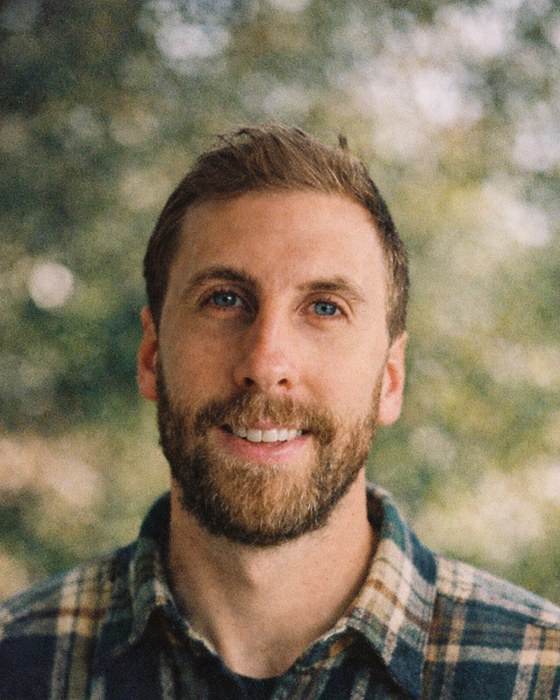 Charley BallantyneBuilds the assistants, the MCP servers and the pipelines, and the logging and evaluation around them.LinkedIn
  Taylor MartinRuns the task workshop, measures the automated version against the manual one, and owns the roadmap.LinkedIn
  Wyatt LambertTests the assistants against real work in the field and shapes how they are asked to act.LinkedIn
 More of what we do.
Tell us what you're trying to build.
Thirty minutes, no deck, no pitch. We'll tell you what we'd do, roughly what it takes, and whether we're the right people for it. Sometimes the answer is no and that's a useful call too.